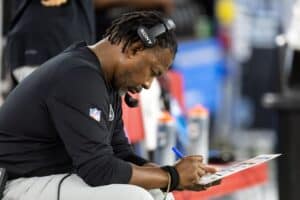
A New Era for the Steelers Defense: How Patrick Graham is Reshaping Pittsburgh
Change is underway for the Pittsburgh Steelers defense, ushered in by the arrival of Patrick Graham as defensive coordinator. While the Steelers have maintained a reputation for rugged, physical play over the years, Graham brings a modern approach, signaling a significant departure from the schemes that have defined the team for the past decade.
From Tradition to Innovation
Under previous coordinators, the Steelers consistently operated from a base 3-4 front, favoring a single-high safety shell—particularly after the arrival of playmaker Minkah Fitzpatrick. This approach, especially in the seasons following Ben Roethlisberger’s retirement, became increasingly conservative. Safeties would play deep, giving up underneath routes in favor of limiting explosive plays. The philosophy became “bend, but don’t break,” frequently frustrating fans as opponents capitalized on soft coverages and short passes.
By contrast, Graham embraces a philosophy tailored for the 2020s NFL. His defenses are characterized by heavy use of nickel sub-packages and imaginative pressure schemes. Most notably, Graham prefers living in two-high safety shells, encouraging post-snap rotation and confusion for opposing quarterbacks. This stands in stark contrast to the previous iteration’s reliance on single-high looks and a more static coverage.
Blitz Philosophy and Personnel Fit
One of the most notable shifts will come from Graham’s willingness to pressure the quarterback aggressively. While former coordinator Keith Butler was known for dialing up exotic blitzes and was rewarded with league-leading sack numbers from 2017-2021, recent seasons saw a decline in both sack production and blitz frequency. Graham’s time in Las Vegas demonstrates his appetite for risk—he led the NFL in six- and seven-man pressures in his final seasons there.
This aggressive mentality syncs well with the Steelers’ current defensive backs, particularly Joey Porter and Jamel Dean, who possess strong man coverage skills. The versatility of newcomers like Jalen Ramsey also gives Graham a movable chess piece for his preferred star or nickel role. The ability to disguise coverages, rotate safeties, and heat up opposing passers could give Pittsburgh’s defense an identity shift—one that’s more unpredictable and disruptive.
Addressing Past Issues: Communication and Cohesion
Beyond scheme, communication breakdowns significantly hindered the Steelers over the past two seasons, especially as the team endured heavy turnover at linebacker and in the secondary. Lack of continuity led to frequent coverage busts and critical mistakes in high-leverage situations. Graham’s strengths as a teacher and communicator, coupled with his background under coaching legends like Bill Belichick and Steve Spagnuolo, bode well for tightening up these lapses. His Vegas defenses, though not always star-studded, routinely played more disciplined and exceeded expectations.
A New Look at Run Defense
Any defensive overhaul comes with trade-offs. Graham’s reliance on sub-packages and two-high looks puts a premium on strong run fits from the linebackers, safeties, and star defenders. The linebacker room remains largely unchanged despite some concerns that the current group struggled against the run last season. Though the defensive line has been fortified with depth and talent in the offseason—adding players like Sebastian Joseph-Day—the effectiveness of the run defense will come down to how well these moving parts adapt to increased responsibilities and aggression in the box.
Building Depth and Flexibility
The Steelers have stockpiled defensive linemen through free agency and the draft, striking a balance between proven veterans and developmental prospects. This rotation aims to keep veterans like Cam Heyward fresher throughout the grueling regular season. Even so, not all newcomers will secure a spot on the active roster given the preference for sub-packages, but the added competition provides insurance against injuries and allows for flexibility as Graham tweaks his scheme throughout the season.
Coaching in the Offseason
As players take a break before the rigors of training camp, coaching staffs use the downtime for both rest and strategic planning. For seasoned coaches, these weeks represent rare moments with family before the demands of a new season ramp up. However, anticipation and pressure are already mounting for new leadership, especially for those in dream, potentially make-or-break positions like head coach Mike McCarthy. The pressure to maintain Pittsburgh’s two-decade-long streak of winning seasons—unmatched in the NFL—is palpable.
The Outlook Ahead
Graham’s hiring signals a willingness to evolve, bringing fresh defensive concepts to counter modern offenses across the league. The Steelers’ personnel appear well-suited for the shift, but the true test will come when aggressive new strategies are put to the test on Sundays. Fans have reason to hope that renewed discipline, creativity, and adaptability will reverse recent disappointments and restore the Steelers to defensive prominence in the seasons ahead.
I dove into this topic more with our own Kevin Smith on a recent “Let’s Ride” podcast. You can see/hear the show in the players below:



This is an important subject, but I want to offer a friendly adjustment.
Last year, the Steelers played nickle far more often (71.3%) than the Raiders (43.8%). In fact, the Raiders played in their base defense (45.2%) far more often than the Steelers did (28.7%). The big difference, however is that the Steelers basically never played in the dime (0.0% of snaps) or quarter (0.0% of snaps) sub-packages last year, whereas the Raiders played 10.9% of their snaps in dime and 0.2% of their snaps in quarter.
I don’t think this is a sign that the Steelers are not keeping up with the league, because our personnel tendencies basically mirror the Texans and are close to the 49ers. But some high-caliber defenses (Seahawks, Rams, Ravens) have come to live in the dime, playing as many as 43% (Rams) of their snaps in that configuration (25.7% for the Seahawks).
Last year, the Steelers (42%) and Raiders (44.4%) played roughly the same number of snaps out of a two-high shell.
data from nflreadr
This article triggered a question – has Teryl Austin landed a position with any NFL team yet?
a true Pittsburgh Steelers Fan, since the 70’s defensive coordinator Patrick Graham you need to get younger in the Steelers secondary lets start by getting rid of too old, too slow and over paid Jalen Ramsey now your two starting shut down cover CB shuold be Daylen Everette and Joey Porter Jr. and your slot CB if he stays healthy shuold be Donte Kent Jr. the Steelers shuold start at safety Robert Spears-Jennings these players shuold start on the 2026 Steelers defense